Tuesday, April 8, 2014

Make My Souvenir a Microloan!

Many ethically sourced items we can buy from Africa come from small businesses made possible by microfinance. Like in the US, supporting small businesses in African countries is better for their economies than, say, Wal-Mart. Larger profits and empowerment go to those doing the work, rather than to middlemen who trickle very little of the profit down to the large numbers of workers under them.

Goods you may have bought from these small African entrepreneurs include sugar, chocolate, coffee, and shea butter. These are major crops that many small farmers are capable of making a living from, when they are able to get their crop to market.


Many of the entrepreneurs in Africa are farmers, because this is the majority of rural economies. However, other “typical” rural African businesses sell fabrics, jewelry, and baskets. It is the help of large organizations, like Whole Planet Foundation or Toms, which provides them access to the world market.

Monday, April 7, 2014

Climate Change, Water Scarcity, and the UNICEF TAP Project


In the eighth meeting of the Africa Partnership Forum in Berlin, 2007, it was agreed that, "Although Africa is the continent least responsible for climate change, it is particularly vulnerable to the effects, including reduced agricultural production, worsening food security, the increased incidence of both flooding and drought, spreading disease and an increased risk of conflict over scarce land and water resources. "

An example of this coming to head are the events the Malawi people, who survive solely on their substance farming, have been dealing with. Recently  Malawian farmers are seeing that once-dependable rainfall is becoming increasingly erratic. When they do experience rainfall, it is on the extreme end of the spectrum, so they are thrown back and forth between droughts and floods.

If you're not a Malawian farmer this might seem unrelated to your trip, but keep in mind that these floods are not limited to small village areas. An unplanned flood or intense drought can put both physical and financial strains on your trip. This is why it is so important to do careful research into the weather of the country you are visiting- right up until your trip.

You can also learn what you can do to help developing countries struggling with water shortages and droughts like the Malawian farmers. Programs like the UNICEF TAP Project make it easy for modern, every day people to help families in developing countries by doing one simple thing- not using your cell phone. For every TEN minutes someone is on the UNICEF TAP Project website and doesn't move or use their cell phone, one day's worth of water is donated to a person in need (all through UNICEF's private sponsors). You are not charged, nor is your phone account billed for anything. It's as simple as going on the website then leaving your phone alone for the duration of a shower, a nap, a work meeting, a goodnight's sleep, etc.

No credit card/personal/private information. No downloading anything. It's that simple.

Though there are many other programs that aim to give help to people in developing countries (whether it be through food, medical aid, or water aid) I've never seen a program that made it so simple and effortless for everyday people to help.

Do yourself a favor, and click this link to learn more. It doesn't get much easier than this.

http://tap.unicefusa.org/


Also check out Lucy's prior post about how the water shortages affect African Communities, and what you can do to help. ( A lot of useful tips and advice for water usage on your trip to Africa!)


http://africaspeakstourist.blogspot.com/2014/03/environmental-impact-on-communities.html


----------


If you have any interesting links, blogs or websites about Travel to Africa that you would like us to share, feel free to leave a comment. Once we double check that it's a credible source and it is approved, we will post journal entries with cool links to check out.


Important Links:

http://www.npr.org/blogs/thesalt/2014/01/01/250482654/malawian-farmers-say-adapt-to-climate-change-or-die

http://www.africapartnershipforum.org//meetingdocuments/38897900.pdf

http://www.npr.org/templates/story/story.php?storyId=112073582

Sunday, April 6, 2014

Animals are NOT more important than humans


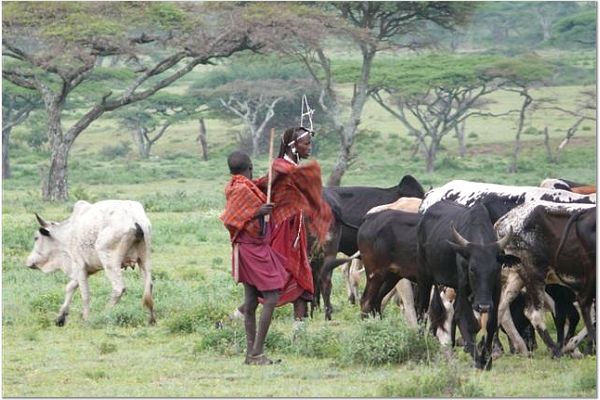
We recently watched a documentary about the Maasai people, as Jack mentioned in one of his blog posts.

Aside from being displaced from their homes, the Maasai people also face many changes caused by tourism.

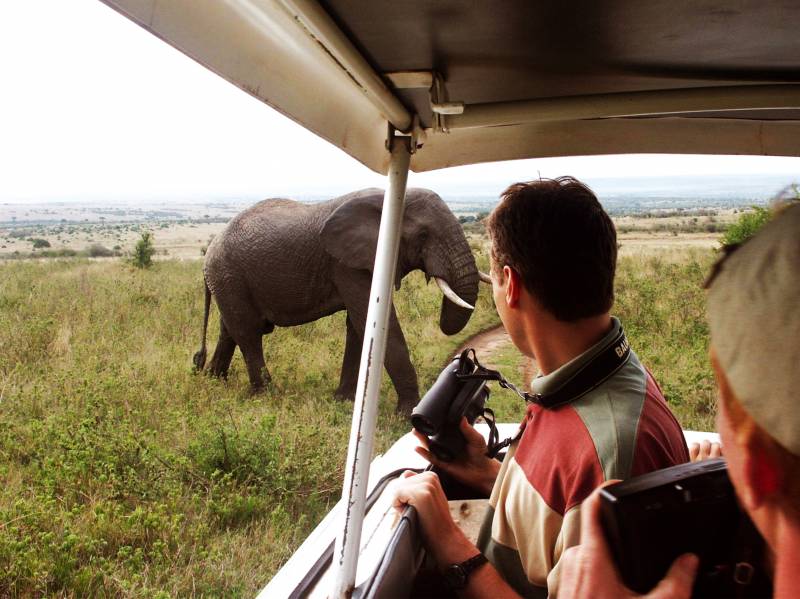
For example, there are special safaris set aside for tourists to hunt animals for game. However, the animal is typically stuffed and is wasted as a good source. Many locals, meanwhile, depend on these animals for meat, yet are not allowed to hunt these animals even though their communities NEED the meat. (The Maasai, however, do not depend on these animals for meat except in times of extreme famine, as they raise their own livestock).

The Maasai used to have a mutually beneficial relationship with the environment, but were evicted by British colonialists in the name of protecting the environment. Sound familiar? That's because Native Americans used to live in areas of what we now know as national parks--areas we think of as nature untouched by man. There is a common misconception that humans and animals cannot coexist, but it is a myth. However, this misconception has caused a tremendous amount of damage over the years. Native people (who have lived on the land for hundreds of thousands of years) are seen as undesirable and evicted from areas, so as to make for better photo opportunities of animals for tourists. It's unfortunate that there is far more concern shown for animals than people.


It's also important to note that places like safaris are almost never run by natives, who don't get any money most of the time. Their water supply is also drained out so that tourists can use it. Even when safaris include Maasai people in them, they are typically exploited and meant to be entertainment for tourists. Children even drop out of school to pose for photographs.

Even though I provided some links in my last post, here is a list of some more responsible tourism agencies and lodges in Africa that help the community:

Governor's Camp Collection
Manda Wilderness
Anvil Bay
Ilha de Mocaambique
Covane Community Lodge

I want to bring the focus of the post back to its title. I have seen a lot of cynical attitudes towards humans in regards to environmentalism lately. If you read nearly any article about pollution or poaching and scroll down, you'll find comments complaining about how terrible human beings are, that they deserve to be wiped out, etc.

These are very, very, dangerous ideas to have. Animals are NOT more important than humans.

As a Chinese person, this has always been important to me, since I've had to grow up reading racist comments anytime I try to do research about rhino horns or elephant tusks. I've had to endure people seriously suggesting that we bomb China's capital city--home to 11 million people--in the name of "saving rhinos".

Placing an emphasis on animals over humans is not only harmful, but also counterproductive. Aside from the harm done from displacing locals people, even the least invasive of safaris (where people only view animals) place a lot of stress on wild animals. The unbalanced focus on popular animals such as elephants, leopards, and giraffes results in little concern for less-photogenic animals and more importantly, the entire entire ecosystem as a whole. The romanticism of animals being pure ends up with us projecting emotions and thoughts onto them, which is what leads to them being captured and put in places like aquariums and zoos.

What we should aim for instead is treating humans and animals are two groups that both deserve an equal amount of respect, and finding a balance between humans and animals, and creating a sym-biotic relationship where both parties can thrive off of each other.


Tuesday, April 1, 2014

The REAL Cost, Chapter 2: Make it Fair

Step one: make your dollars vote. Make sure that the materials in any electronics you buy in the future have a verified chain of custody, starting from the day they left the ground. And soon, it’ll be a lot easier: in May, the Dodd-Frank Act requires publicly traded companies to issue their first conflict minerals report.

Step two: learn more. Watch movies, look at what nonprofits are doing, or check out some books from your local library. Here are a few to get you started:

Dancing in the Glory of Monsters, by Jason Stearns
Africa's World War: Congo, the Rwandan Genocide, and the Making of a Continental Catastrophe, by Gerard Prunier
The Enough Moment, by John Prendergast with Don Cheadle
King Leopold's Ghost: A Story of Greed, Terror, and Heroism in Colonial Africa, by Adam Hochschild
 A Thousand Sisters, by Lisa Shannon

Step 3: spread the word. If you’re not on a college campus (or even if you are), you could start by signing a Change.org petition. But especially if you are on a college campus, take action! For example, the Conflict-Free Campus Initiative is a network of over 100 colleges and universities nationwide where students are actively petitioning their administrations to institute electronics buying policies which support companies who responsibly invest in the Congo’s mining industry. And finally, tell your friends and families. Bring it up in conversations. In this globalized world, too few people are aware of the consequences of their actions. And you, dear reader, are one of the few.