Wednesday, April 9, 2014

Trophy Hunting

Ernest Hemingway on a successful hunt. Image credit: Wikipedia Commons.

In Africa, one of the biggest enemies to animal conservation is trophy hunting. This is close to, but not to be confused with, poaching, or the illegal killing and harvesting of animals. Instead of being hunted off of preserves and wildlife areas, trophy animals are usually killed legally on private plots of land reserved just for this purpose. Hunters worldwide pay thousands of dollars to fly in and kill the majestic 'beast' of their dreams, all for a the thrill and experience.

Luckily, trophy hunting is often frowned upon by African governments, such as South Africa, which has banned it from its 22 national parks. However, it is not illegal, and the profits made off of trophy hunting on private game parks in South Africa make up a large chunk of the $280 million a year made off of wildlife tourism, an even larger chunk than eco-tourism. This is a negative trend, as it encourages the needless killing of one of Africa's most important features: it's wildlife. In South Africa, 54,000 animals were killed by 6,700 tourists in 2003-2004 hunting season (Tsui).

And even if hunting can be condoned as a viable sport, trophy hunting is completely rigged and unethical. The animals are trained to be comfortable with humans. The animals are often drugged or incapacitated or their range of movement is limited. They are killed with powerful rifles and bows that their natural features could never guard against. What is more, they are often outnumbered and shot from a jeeps or even helicopters. Some even approach the hunter curiously before being shot in the head. Perhaps the only way trophy hunting could be remotely ethical is if the hunter was required to get buck naked and kill the animal with his or her own bare hands or a weapon made using his or her own skills in the wild.

A wall-mounted Cape Buffalo head. Image credit: Lord Mountbatten, Wikipedia Commons.

In addition to attracting animal killers the world over, trophy hunting feeds another malevolent industry: captive breeding. Breeding farms exist all over South Africa, and it is estimated that 3,000 lions are brought up in captivity each year for the sole purpose of trophy hunting. In these farms, the animals are exposed to humans early in order to curb hostility. They are often housed in tiny cages and torn from their mothers prematurely. What is more, they are even bred with different species to produce animals that are slower and easier to kill, such as the "zonkey,' or zebra-donkey.

Here is an example of a pay-to-order, package-based, trophy hunting vacation outfit:

http://www.africanskyhunting.co.za/trophy-hunting.html

African Sky Hunting, stationed in South Africa and Zimbabwe, offers hunters the ability to pay for their own "hunting packages." For instance, one could buy the "5-Day Beginner's Package," which includes one Blue Wildebeest, one Impala, and one Blesbok. But that's not all. The hunting fanatic could purchase a $78,675, "21 Day Lion, Buffalo, & Elephant" package, which offers one Lion, one Cape Buffalo, one Elephant, one Kudu, one Blue Wildebeest, and one Zebra. Each package shows a picture of a happy tourist crouching over a dead animal, content with his or her violent accomplishment.

A powerful anti-trophy hunting video:

https://www.youtube.com/watch?v=rcuDILOo6x4&oref=https%3A%2F%2Fwww.youtube.com%2Fwatch%3Fv%3DrcuDILOo6x4&has_verified=1

The heavily hunted Cape Buffalo. Image credit: Leonara Enking, Flickr.

References:

Your Travel Kit


I mentioned in an earlier post the importance of being well prepared with a travel kit that is both useful to your trip- as well as non-harmful to the country of your visit. To further elaborate on that, I've compiled a list featuring the Top 3 things that I think are most important to know in order to keep your trip to Africa eco-friendly and helpful to the host country.


photo credit: travelfashiongirl.com


1. Clothes you can leave behind
Packing light is important when you’re flying in light aircraft and moving between camps. One way to free up space as you go and leave room for souvenirs is to pack clothing you can leave with locals. In poorer countries like Tanzania and Zambia, our hand-me-downs are most welcome. And in more prosperous parts of Africa such as Botswana and South Africa, non-profit organizations distribute donations to communities in need. We left some long-sleeved shirts, khaki trousers and fleece pullovers with our Botswanan guide who offered to donate them for us in Maun, at the end of our trip.
(source)


This is especially important in relating to our other articles about benefiting local communities and lowering your carbon footprint during your visit. It also helps keep the strain on donation and charity groups low, and allows them to focus on providing other necessary aid, such as medical, food, and water based aid.


2. Packing Smart and Packing Early
Most of us end up packing at the last minute in a frantic rush. This means you just pile in whatever you 'might' need, without giving it proper thought and consideration. My husband has a neat trick which saves a lot of space, and that is to roll everything up. Another popular technique is called bundle wrapping, which keeps clothes from wrinkling and takes less space.Another tip is: if you’re going to go snorkeling just once or twice, perhaps it would be easier to hire your gear rather than carry it with you everywhere you go (this is the wisdom of hard-earned experience). Practice lugging your stuff around your apartment before you go. Believe me, if you carry your luggage on your back, you become a lot more selective.

3. Avoid Plastic Bags at all Costs
Many countries around the world( including South Africa! ) are taking the lead in banning plastic bags from stores nationwide. You don't want to add to the problem by bringing in your own from outside the continent. There are many alternative, re-usable or biodegradable bags that are hardy enough to withstand your trip to the town market for souvenirs or groceries. Again, a little bit of research and beginning your packing early can keep you from unnecessarily adding a plastic bag into your things last minute, and inadvertently adding to the thrash problem that many African countries are currently dealing with (as well as the harmful effects plastic bags have on the animals you are probably excited to go see!)
For more travel tips and tricks check out the source links provided, and the other posts on our blog to find out more! Happy travels!


Tread Lightly- Deforestation in Africa

   Photo credit: Deforestation Image via EarthTimes.org

When most of us think of taking a trip out to Africa, a lot of the appeal is seeing the wild untamed land. The sprawling sarangeti and the african safaris. However, is tourism helping destroy that same thing which we admire?

     Photo credit: WWF

As you may have already read in previous posts, tourism can have a very harmful to Africa, even though it brings a lot of income to the continent. One of the main negatives tourism contributes is pollution, but that aside, Africa is also suffering from an alarming increase in deforestation. In fact, according to the UNEP (The United Nations Environment Programme) the continent is losing more than four million hectares of forest every year, and the continent's few glaciers are shrinking fast.

To put that into perspective, four million hectares is roughly the size of Switzerland.

Satellite pictures showed recent "scars" or big gaps of damages, in the forests of countries like Democratic Republic of Congo, Malawi, Nigeria, and Rwanda.

Why is this especially alarming? Because those countries bring in a sizable amount of money through tourism; tourism is attracted to wildlife; wildlife needs vegetation and trees to survive, and for the people of some countries, trees are the main things helping them survive severe droughts and provide for their families.


So how can your trip to Africa avoid doing further damage?

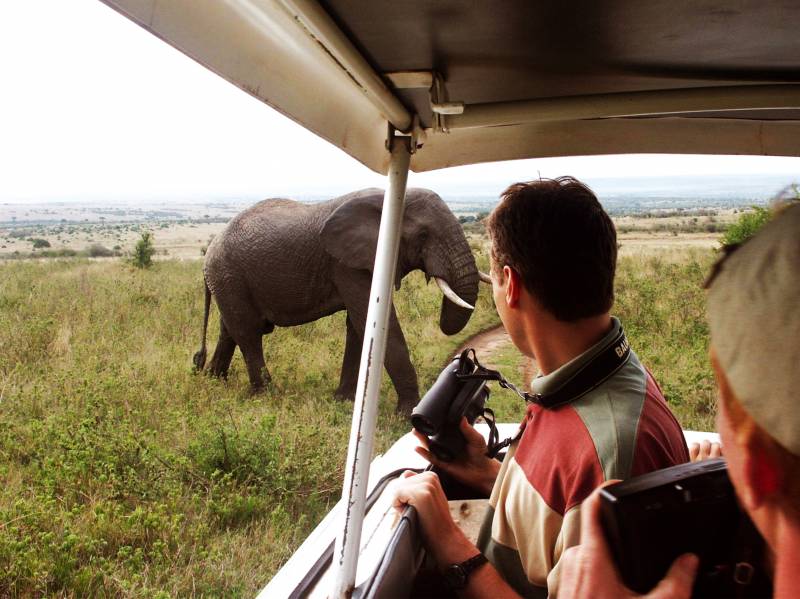
Like Jack mentioned in an earlier Animal Friendliness Post, do research into the hotels you'll be staying in, and the safaris you'll be taken. Was the hotel just recently built? Did it use the workforce of locals and a healthy amount of Africa's resources, or did it contribute the deforestation problem the continent is facing? Are the safaris you are taking through an eco-friendly group? Or is the jeep driver promising to take you in to "secret" or "never before seen" areas where you're normally not allowed to go? (Hint: if jeeps aren't supposed to be there, there's a good chance it's trampling vegetation that animals use as a food source ) Do any of the company's profits go towards conservation?

Jack provided some good links earlier, but I'd also like to mention the efforts of the World Wildlife Fund and the success they have had with Namibia in making sustainable tourism a success.

The WWF has many more articles on eco-tourism and many more suggestions on ways tourists can help, just take a look through their site and enjoy!


Tuesday, April 8, 2014

Money Matters: Beggars and Hagglers

While traveling in certain countries in Africa you may encounter beggars of all types--men, women, children, the elderly, etc. It is very easy to feel sympathetic and want to donate some money, but in many cases you are doing more harm than good.


Although it is impossible to generalize for a whole group, beggars typically end up in their position because of issues such as alcohol and drugs, and giving them money makes these things more accessible to them. This perpetuates a cycle of poverty and dependence that is difficult to break out of.

Luckily, there are many other alternatives:

-Buy them food
-Buy them food vouchers
-Buy them entry passes to homeless shelters (check out the Haven Night Shelter for adults, The Pride Shelter for LGBTQ, Ons Plek for girls and Beth Uriel for boys)
-Buy the Big Issue magazine, a magazine sold by underprivileged people as part of a training program

-Donate to charity organizations instead
-Dine at restaurants that participate in StreetSmart South Africa, a program that allows you to pay 5 extra rands that will be donated to welfare organizations
-Send a text to 38088 to donate 10 rands to various charities in Cape Town
-Some organizations worth donating to include Beautiful Gate, City Mission, Straatwerk, and Salesian Institute Youth Projects.

(source)


A similar issue that is a bit trickier is haggling, and how to approach it in Africa. Sometimes, a seller may see that you are a tourist and try to exploit you by overcharging, while other times haggling can be harmful to someone who is already very poor. It's important to do research depending on the country and the type of place you are shopping at. For example, in Gambia, there are many people who are poor but extremely generous and willing to give up a lot for others, and should not be taken advantage of. In places like North Africa, haggling is commonplace and can be a form of social interaction. However, in places that get many tourists, like Egypt, most sellers are definitely trying to exploit you for your money.

You should also make sure that what you're trying to haggle is open to negotiations, as things like food items, transportation, and imported goods are at a fixed price.

It is worth mentioning, though, that considering the difference in currency values, you can often afford to pay more than locals for something. That doesn't mean it's acceptable for someone to charge you ten times the local price, but that you shouldn't be upset if you have to pay more for an item, especially if it comes out to be relatively cheap in US dollars. A good way to get a bargain without exploiting a vendor would be to barter. Things like brand-name sneakers are very valuable to locals in parts of Africa, but don't push it if the other person is not interested.

Above all, make sure you keep things friendly when you haggle. Learn some phrases in the local language. Shake hands with the vendor. And remember, you're looking for a fair price--not the lowest possible price.

(source 1, source 2)

Make My Souvenir a Microloan!

Many ethically sourced items we can buy from Africa come from small businesses made possible by microfinance. Like in the US, supporting small businesses in African countries is better for their economies than, say, Wal-Mart. Larger profits and empowerment go to those doing the work, rather than to middlemen who trickle very little of the profit down to the large numbers of workers under them.

Goods you may have bought from these small African entrepreneurs include sugar, chocolate, coffee, and shea butter. These are major crops that many small farmers are capable of making a living from, when they are able to get their crop to market.


Many of the entrepreneurs in Africa are farmers, because this is the majority of rural economies. However, other “typical” rural African businesses sell fabrics, jewelry, and baskets. It is the help of large organizations, like Whole Planet Foundation or Toms, which provides them access to the world market.

Monday, April 7, 2014

Climate Change, Water Scarcity, and the UNICEF TAP Project


In the eighth meeting of the Africa Partnership Forum in Berlin, 2007, it was agreed that, "Although Africa is the continent least responsible for climate change, it is particularly vulnerable to the effects, including reduced agricultural production, worsening food security, the increased incidence of both flooding and drought, spreading disease and an increased risk of conflict over scarce land and water resources. "

An example of this coming to head are the events the Malawi people, who survive solely on their substance farming, have been dealing with. Recently  Malawian farmers are seeing that once-dependable rainfall is becoming increasingly erratic. When they do experience rainfall, it is on the extreme end of the spectrum, so they are thrown back and forth between droughts and floods.

If you're not a Malawian farmer this might seem unrelated to your trip, but keep in mind that these floods are not limited to small village areas. An unplanned flood or intense drought can put both physical and financial strains on your trip. This is why it is so important to do careful research into the weather of the country you are visiting- right up until your trip.

You can also learn what you can do to help developing countries struggling with water shortages and droughts like the Malawian farmers. Programs like the UNICEF TAP Project make it easy for modern, every day people to help families in developing countries by doing one simple thing- not using your cell phone. For every TEN minutes someone is on the UNICEF TAP Project website and doesn't move or use their cell phone, one day's worth of water is donated to a person in need (all through UNICEF's private sponsors). You are not charged, nor is your phone account billed for anything. It's as simple as going on the website then leaving your phone alone for the duration of a shower, a nap, a work meeting, a goodnight's sleep, etc.

No credit card/personal/private information. No downloading anything. It's that simple.

Though there are many other programs that aim to give help to people in developing countries (whether it be through food, medical aid, or water aid) I've never seen a program that made it so simple and effortless for everyday people to help.

Do yourself a favor, and click this link to learn more. It doesn't get much easier than this.

http://tap.unicefusa.org/


Also check out Lucy's prior post about how the water shortages affect African Communities, and what you can do to help. ( A lot of useful tips and advice for water usage on your trip to Africa!)


http://africaspeakstourist.blogspot.com/2014/03/environmental-impact-on-communities.html


----------


If you have any interesting links, blogs or websites about Travel to Africa that you would like us to share, feel free to leave a comment. Once we double check that it's a credible source and it is approved, we will post journal entries with cool links to check out.


Important Links:

http://www.npr.org/blogs/thesalt/2014/01/01/250482654/malawian-farmers-say-adapt-to-climate-change-or-die

http://www.africapartnershipforum.org//meetingdocuments/38897900.pdf

http://www.npr.org/templates/story/story.php?storyId=112073582

Sunday, April 6, 2014

Animals are NOT more important than humans


We recently watched a documentary about the Maasai people, as Jack mentioned in one of his blog posts.

Aside from being displaced from their homes, the Maasai people also face many changes caused by tourism.

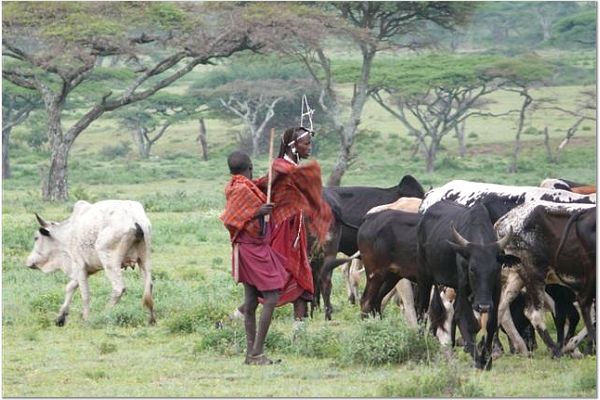
For example, there are special safaris set aside for tourists to hunt animals for game. However, the animal is typically stuffed and is wasted as a good source. Many locals, meanwhile, depend on these animals for meat, yet are not allowed to hunt these animals even though their communities NEED the meat. (The Maasai, however, do not depend on these animals for meat except in times of extreme famine, as they raise their own livestock).

The Maasai used to have a mutually beneficial relationship with the environment, but were evicted by British colonialists in the name of protecting the environment. Sound familiar? That's because Native Americans used to live in areas of what we now know as national parks--areas we think of as nature untouched by man. There is a common misconception that humans and animals cannot coexist, but it is a myth. However, this misconception has caused a tremendous amount of damage over the years. Native people (who have lived on the land for hundreds of thousands of years) are seen as undesirable and evicted from areas, so as to make for better photo opportunities of animals for tourists. It's unfortunate that there is far more concern shown for animals than people.


It's also important to note that places like safaris are almost never run by natives, who don't get any money most of the time. Their water supply is also drained out so that tourists can use it. Even when safaris include Maasai people in them, they are typically exploited and meant to be entertainment for tourists. Children even drop out of school to pose for photographs.

Even though I provided some links in my last post, here is a list of some more responsible tourism agencies and lodges in Africa that help the community:

Governor's Camp Collection
Manda Wilderness
Anvil Bay
Ilha de Mocaambique
Covane Community Lodge

I want to bring the focus of the post back to its title. I have seen a lot of cynical attitudes towards humans in regards to environmentalism lately. If you read nearly any article about pollution or poaching and scroll down, you'll find comments complaining about how terrible human beings are, that they deserve to be wiped out, etc.

These are very, very, dangerous ideas to have. Animals are NOT more important than humans.

As a Chinese person, this has always been important to me, since I've had to grow up reading racist comments anytime I try to do research about rhino horns or elephant tusks. I've had to endure people seriously suggesting that we bomb China's capital city--home to 11 million people--in the name of "saving rhinos".

Placing an emphasis on animals over humans is not only harmful, but also counterproductive. Aside from the harm done from displacing locals people, even the least invasive of safaris (where people only view animals) place a lot of stress on wild animals. The unbalanced focus on popular animals such as elephants, leopards, and giraffes results in little concern for less-photogenic animals and more importantly, the entire entire ecosystem as a whole. The romanticism of animals being pure ends up with us projecting emotions and thoughts onto them, which is what leads to them being captured and put in places like aquariums and zoos.

What we should aim for instead is treating humans and animals are two groups that both deserve an equal amount of respect, and finding a balance between humans and animals, and creating a sym-biotic relationship where both parties can thrive off of each other.


Tuesday, April 1, 2014

The REAL Cost, Chapter 2: Make it Fair

Step one: make your dollars vote. Make sure that the materials in any electronics you buy in the future have a verified chain of custody, starting from the day they left the ground. And soon, it’ll be a lot easier: in May, the Dodd-Frank Act requires publicly traded companies to issue their first conflict minerals report.

Step two: learn more. Watch movies, look at what nonprofits are doing, or check out some books from your local library. Here are a few to get you started:

Dancing in the Glory of Monsters, by Jason Stearns
Africa's World War: Congo, the Rwandan Genocide, and the Making of a Continental Catastrophe, by Gerard Prunier
The Enough Moment, by John Prendergast with Don Cheadle
King Leopold's Ghost: A Story of Greed, Terror, and Heroism in Colonial Africa, by Adam Hochschild
 A Thousand Sisters, by Lisa Shannon

Step 3: spread the word. If you’re not on a college campus (or even if you are), you could start by signing a Change.org petition. But especially if you are on a college campus, take action! For example, the Conflict-Free Campus Initiative is a network of over 100 colleges and universities nationwide where students are actively petitioning their administrations to institute electronics buying policies which support companies who responsibly invest in the Congo’s mining industry. And finally, tell your friends and families. Bring it up in conversations. In this globalized world, too few people are aware of the consequences of their actions. And you, dear reader, are one of the few.


Sunday, March 30, 2014

Green Army: The International Anti-Poaching Foundation (IAPF)

IAPF rangers. Image credit: National Geographic.

A powerful cause for the fight against poaching in Africa is The International Anti-Poaching Foundation (IAPF), stationed in Zimbabwe. It works using military-style tactics and equipment to put a stop to illegal harvesting on protected lands such as the Stanley & Livingstone Private Game Reserve. They take a proactive, direct approach to animal conservation with technology such as remote-controlled UAVs (Unmanned Aerial Vehicles) to see from above and catch poachers.


Zimbabwe is in trouble. According to WWF anti-poaching advocate Tom Melliken, “Because Zimbabwe is still under sanctions from the European Union and the United States, government aid money is not coming to beef up the wildlife sector.” As such, poaching has increased greatly.

Damien Mander launching one of IAPF's UAVs. Image credit: IAPF, Wikipedia Commons.

The illegal wildlife trade trails behind human trafficking and narcotics as the third most lucrative illegal market, making $20,000,000,000 per year. Rhino horn, elephant tusks, lion parts, hooves, organs-- the list goes on and on. It's an almost impossible juggernaut of a business to track, let alone stop.

The most ironic part about the rhino horn trade is that rhino horn has absolutely NO HEALTH BENEFITS AT ALL. None. It's made of KERATIN, or HAIR, and does not act as an aphrodisiac or cure for illness. It's like eating a fingernail clipping. And yet, and yet, this giant fingernail sells for $60,000 a kilo and results in the death of hundreds to thousands of rhinos per year. According to www.savetherhino.org, 1,004 were killed in 2013, more than ever before in 21st century. More than 172 have been killed so far in 2014 (March 14th census).

The IAPF often faces negative criticism and disapproval from locals who don't see the value in wildlife conservation. It is also hard for the organization to provide locals incentive to join, as Zimbabwe has a 90% unemployment rate and the ranger salary is $250 per month (a lot less than one can make poaching).

But guess what? There are ways that the average tourist can help. Even if you can't become a ranger...


...you can do a simple fundraiser:


The organization was founded by Damien Mander, an Iraqi War veteran, former Australian naval clearance diver, and special operations sniper. He grew up thinking of animals as creatures to be hunted, negligible. Watch his no-nonsense TED talk discover what made him change:

Damien Mander, founder of the IAPF. Image credit: IAPF, Wikipedia Commons.
Resources:

Saturday, March 29, 2014

So You're Packed for your Trip to Africa


So all the paperwork is done, the date is set, and you've finished packing for your trip to Africa ahead of time. You're all done- or are you? A very common mistake people make is to look for packing lists or guides about packing for their trip to Africa, but rarely do people think to research supplies specific to the COUNTRY in Africa that they are visiting. Morocco's seasons and recycling system are completely different from South Africa, South Africa's is different from Chad's, and so on, and so on. Now before you panic, this doesn't mean all your hard work gathering supplies and packing was all for not. It simply means some further research and changes are going to be necessary before your trip to Africa.

1. The Weather- It's very common for tourists to think "oh, my tour guide" "my host" "my safari leader" etc, will know the weather ahead of time before our safari, or hike, or trip to a new city, but you have to keep in mind that the weather in many African countries can be volatile. Though your tour guide may have a good idea of what nature has planned for that day, you, as the traveler, should also be prepared for anything. That also means that your gear needs to be ready for anything. This is when researching your country of interest is important. Maybe while visiting South Africa the weather is very hot and so you need a lightweight bag with breathable material to keep from overheating,  but in Chad it might be raining for days straight, and that same bag that was useful for South Africa, is now useless under Chad's torrential downpour. Researching the weather before every trip- and to every new country- will save you a lot of headaches later on.

2. Recycling- Great! So you've now researched about the weather, but wait, did you research recycling? At first it might not seem like these two topics are connected, but they are actually more interwoven than you may think. For example, maybe you're ready for the hot weather and bought some disposable water bottles for this one trip, but can it be recycled? Though many foreigners that visit Africa come from countries in which recycling has been established for a while, and every day things like water bottles can be recycled, a lot of countries in Africa do NOT have well established recycling plants yet. So maybe you and each member of your family brought a water bottle for the trip- that's not so bad right? An approximated 12.5 million foreigners traveled to Africa in 2011. Keep in mind that number, and how many perhaps also brought plastic bottles or other non-biodegradable items to countries that did not have the means to recycle them.  Please try to make sure you only bring items that, if you know you'll be throwing away, fit into the recycling system set up by your country of visit. Also, help support groups aimed at clean-up and recycling during your visits, such as The Waste Pickers Alliance of Mooi River, who are based in South Africa. 

3. Drinking Water- A big worry for many travelers is healthy drinking water, and this directly ties in to the problem of recycling and trash caused by tourism. Though many hotels that you stay at will have clean drinking water available to you throughout the time of your stay, it always better to be safe than sorry. Some tourists carry canteens with their own water inside, but it is also very smart if you're going on a safari or hike to have a cooking pot in your belongings. In the case of an emergency flat tire or other unplanned pause to your trip, a pot and the means to start a fire is all that's needed to make local river water safe for drinking.

Some tap and natural water may have a slight brown tinge from humic acid, which is harmless and does not affect drinking water quality in South Africa." - www.SouthAfrica.net


Take these things in to mind, and do a last check of your supplies and plans before the date of your departure. Safe travels!


Helpful Links:

Mooi River Waste Pickers:
http://www.greengrants.org/our-grants/grantee-highlights/south-africa-waste-pickers/

CDC( Centers for Disease Control) on Water Purification:
http://wwwnc.cdc.gov/travel/page/water-disinfection

CDC( Centers for Disease Control) Health Information for Travelers to South Africa:
http://wwwnc.cdc.gov/travel/destinations/traveler/none/south-africa

How Much Did Your New Gadget REALLY Cost?


You may not be wearing any blood diamonds, but there’s a good chance that the minerals powering your cell phone –tungsten, tantalum, tin, and gold – are every bit as bloody. That’s because most of these minerals are mined in the Congo, by the hands of men, women, and children risking their lives and their health for around one US dollar per day. All of the things our country has done to protect our rights, such as child labor laws, workers’ compensation, and EPA regulations of poisonous heavy metals such as mercury (used in mining gold), don’t exist over there. And that’s exactly where US and other developed nations have gone to find the resources to build the gadgets and games we hunger for.


The Congo is paradoxically one of the most mineral-rich places on Earth, yet its people are some of the poorest. Over the course of 15 years, ethnic violence has amounted to over 5 million deaths, making it “the deadliest conflict zone since World War II.” This violence - the gun money - is fueled by our pocketbooks. Warlords run mines and demand payment from their workers. In 2010, the US Congress passed the Dodd-Frank Wall Street Reform Act, which included in it a clause requiring companies to disclose (not to stop – just to disclose) whether they were purchasing minerals from conflict-ridden areas Congo and its neighbors.

Opinions about the success of the Dodd-Frank Act are mixed. Some say the result has devastated the Congo by causing companies to pull out of the country entirely, leaving miners without a way to feed their families while warlords simply move on to find their income elsewhere. Others, however, point out that companies are finding conflict-free Congolese sources, and that these jobs, which are increasing, pay their workers higher, more fair wages. And all good things, like national health care, require a difficult period of transition for a positive outcome to result.

In the end, it is up to us, the consumers, to demand products that are mined, assembled, and sold by workers who are treated with dignity.


Sources:


Tuesday, March 25, 2014

The Maasai: Their Land, Their Heritage

A Maasai woman in beautiful bead work. Image credit: William Warby, Flickr.

One of the most infamous examples of tourism negatively impacting a culture, the animals, and the environment can be found in the plights of the Maasai people of Kenya and Northern Tanzania.

The Maasai are in a sticky situation. Their homeland, particularly the famous Mara wildlife reserve, has become a massive tourist attraction. This fact, in combination with the removal of their people from their native lands by the government so as to protect the natural wilderness, has led to a great deal of problems for the Maasai way of life. Funny enough, their forced exodus has caused a great deal of problems for the natural wilderness they once cared for.


Sunset at the Mara Wildlife Reserve. Image credit: Sankara Subramanian, Flickr.
The Maasai would live at one with the land on which they herded animals as functioning part of the ecosystem, only taking meat when they needed and fostering growth. In the Ngorongoro crater, they would even often burn the grasses to replenish the soil nutrients. This practice figured into why they were removed as well. Ironically enough, the government began creating fires again once it was rediscovered to be beneficial, while the Maasai had been doing it out of deep connection and understanding of their own land for decades.


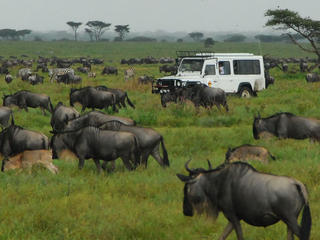
Wildebeest crossing the Mara River. Image Credit: Lip Kee, Flickr.


On a cultural level, the Maasai are also experiencing a discrepancy between who they were and who many of them have had to become to survive. Due to the fact that they have lost living rights to much of their original domain, in conjunction with the influx of tourists who come to see the great Mara river crossing or a pride of lions, many have turned fully to the tourism industry. There are villages on the edge of the Mara that cater to tourists and sell them goods. Shows are put on for tourists. Traditional meals are cooked for tourists. The question is: is this a bad thing?

Although this new industry has created fresh business opportunities for such a unique and rich people, who tourists travel in throngs to see, it has also contributed to a loss of time-worn tribal community and a more traditional way of life. They are slowly assimilating the outside world, as many tribal peoples have been forced to in the past. Many are even leaving the villages to seek out opportunities in other areas. This phenomenon is called "Brain Drain."

So how can the average tourist contribute to the restoration of the Maasai's pride and ancestral integrity? The answer is simple, even if the problem is complex. Contribute your money to causes that matter, such as the Maasai association:

http://www.maasai-association.org/help.html

While you are visiting, ask about volunteerism opportunities or helping out on projects that benefit the locals. Check out our blog's articles on free trade goods and benefiting communities for more advice.


A Maasai warrior jumping. Image credit: Javier Carcamo, Flickr.